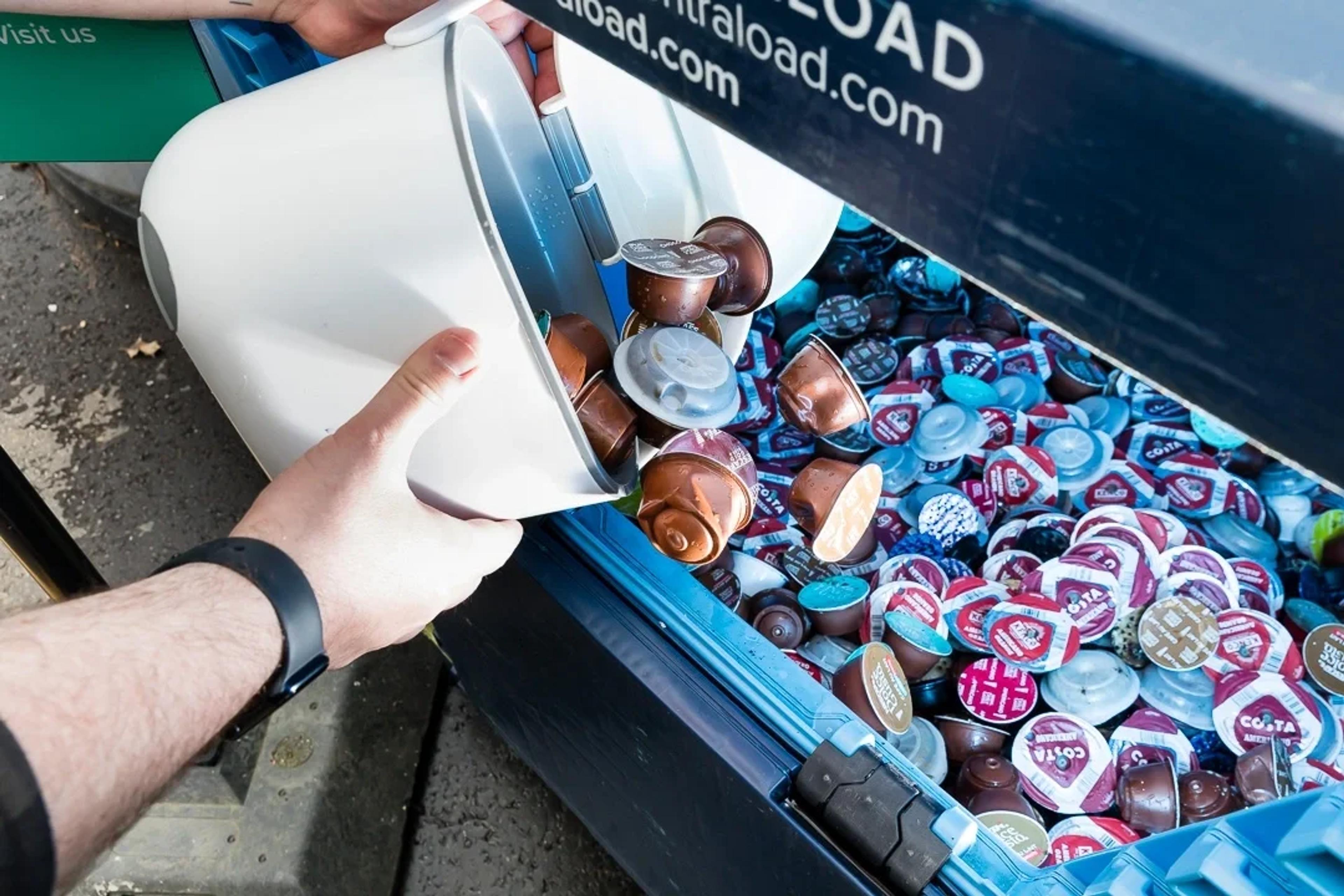
Since Podback first launched, local authorities have played a key role in our mission to develop a nationwide collection system for recycling coffee pods. We are delighted to support LARAC, and especially the annual Conference, and we’re looking forward to two days of insight, debate and thought leadership. We’re also hoping it will open the door to some exciting new opportunities and partnerships.
WHAT'S NEXT FOR PODBACK?
Through a combination of operational partnerships, consumer engagement and innovation, councils have helped us test new approaches and build the evidence that will support pod recycling. And as infrastructure and technology advance, we’re now looking for local authority partners for the next phase of Podback’s evolution.
Our ambition is that pods should be collected alongside other materials at the kerbside, and we’ve been exploring how advances in collection and sorting technology can enable coffee pods to become part of future recycling systems. We’re ready to share our progress and discuss taking the next steps – investing in running trials to prove the opportunities which we believe lie ahead for pod recycling.
If you’d like to find out more about partnering with Podback and helping us to bring about the innovation that will shape our future, please talk to us during the Conference!
HOW PODBACK CAN SUPPORT YOUR RECYCLING SERVICE TODAY
While we’re looking to the future, we continue to focus on maximising the current system.
Podback is currently supporting 162 local authorities to provide coffee pod recycling facilities at more than 330 household waste and recycling centres (HWRCs), meaning that over 50% of UK households can recycle pods in their local authority area.
The first HWRCs to partner with Podback were in Suffolk and the Re3 Waste Partnership in Berkshire in 2023. Since that time over 800 tonnes of pods have been collected at HWRCs nationwide. So far this year, 10 of Podback’s HWRC partners have collected over 10 tonnes of pods, with North Yorkshire County Council and Essex County Council both passing the 20 tonne mark within the first six months of the year.
ADD COFFEE PODS TO YOUR HWRCs WITH PODBACK!
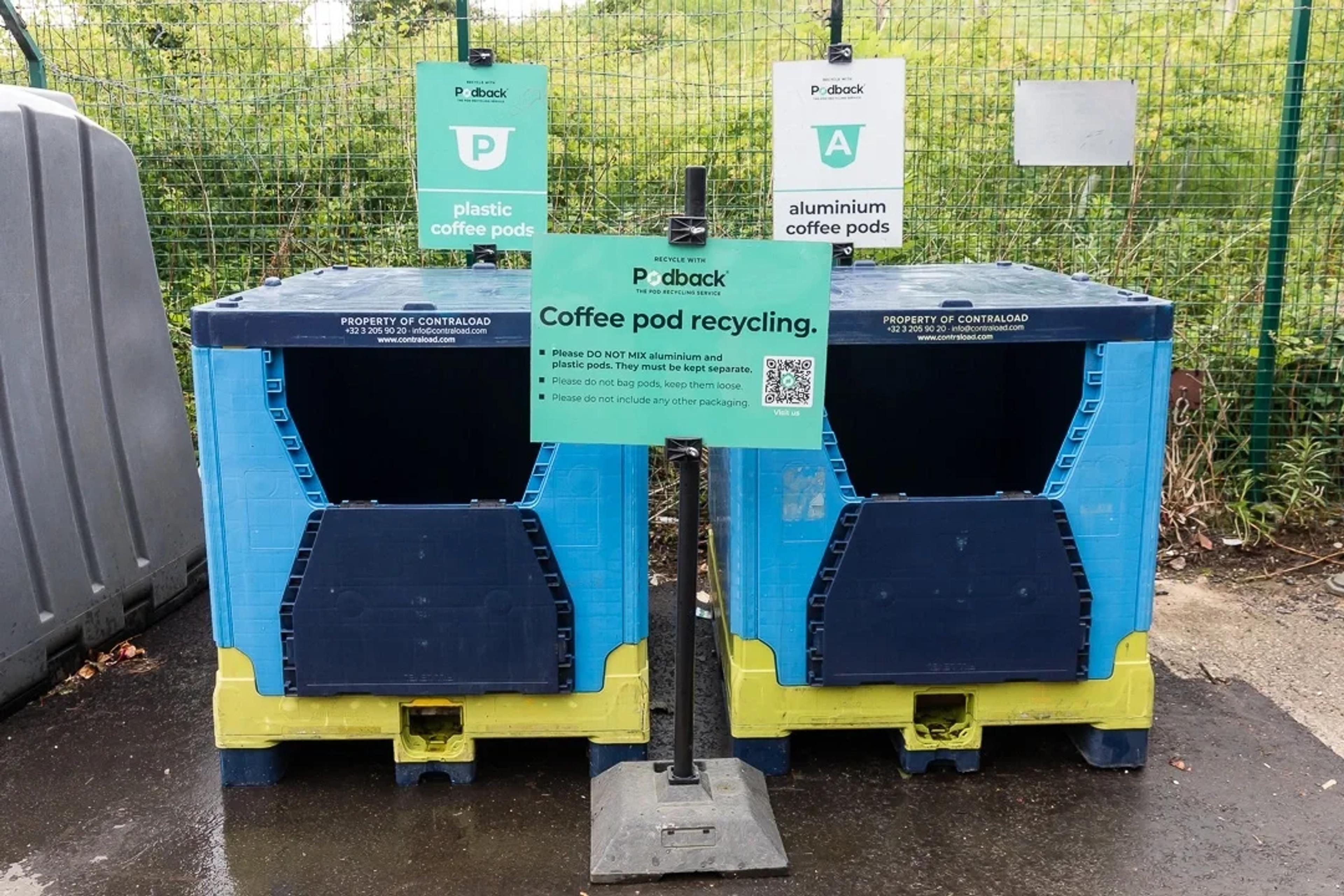
Podback provides everything you need to start collecting coffee pods:
- Collection containers
- Signage
- Marketing assets
- Logistics – regular collections*
- Data
*Collections take place at least once every four weeks, in order to comply with Environment Agency regulatory position on storage of used coffee pods[1] .
What do residents need to know?
- Plastic and aluminium pods need to be saved separately.
- No bag required: Pods can simply be saved at home in any container and tipped loose at the HWRC.
- How to dispose of, or recycle, the bag or box they’ve brought their pods in – if it can’t be reused.
Is there a cost?
No. Collecting pods for recycling with Podback is cost-neutral to the authority.
How much work is involved?
The mobilisation process is designed to require minimal input for local authorities. The Podback team will work with you to make the practical arrangements, including delivery of the containers and signage. The marketing assets are formatted and ready to drop into your comms calendar.
How long does it take to get up and running?
From agreement to launch typically takes six weeks.
What are the benefits to the local authority?
Partnering with Podback demonstrates to residents you are committed to finding solutions for “hard-to-recycle” materials.
Over 20% of households own a coffee pod machine. A recent survey of pod consumers[3] revealed that 40% used pods at least once a day. Our daily website traffic also indicates a high demand for pod collections, with thousands of searches coming from all over the UK.
Podback will provide tonnage and destination data for each material for local authority WasteDataFlow, so collections can be attributed to recycling rates.
What happens to the pods?
All pods collected by Podback are reprocessed in the UK.
At our recycling hub in East Yorkshire pods are shredded to remove the coffee grounds, which are sent to a food waste recycling plant. Anaerobic digestion creates renewable energy (biogas) for the National Grid, and a nutrient rich organic fertiliser for local farms.
Our aluminium reprocessor is based in South Wales. Aluminium is remelted and used by manufacturers of beverage cans and automotive components. Plastic pods are recycled in the West Midlands and used in the manufacture of a variety of products for the packaging and building sector.
Notes:
[1] Temporary storage of waste coffee pods: RPS 282 - GOV.UK (www.gov.uk)
[2] Source: Kantar WPO | 52W | Volume (Cups) | W/E 11.06.23
[3] Survey of 3000 coffee pod consumers and Podback users undertaken for Podback by Spark Market Research in September 2025
For more information talk to us at the LARAC Conference 2026 or use our Contact Us form to get in touch with our Operations team